






Network of Meteorological Stations
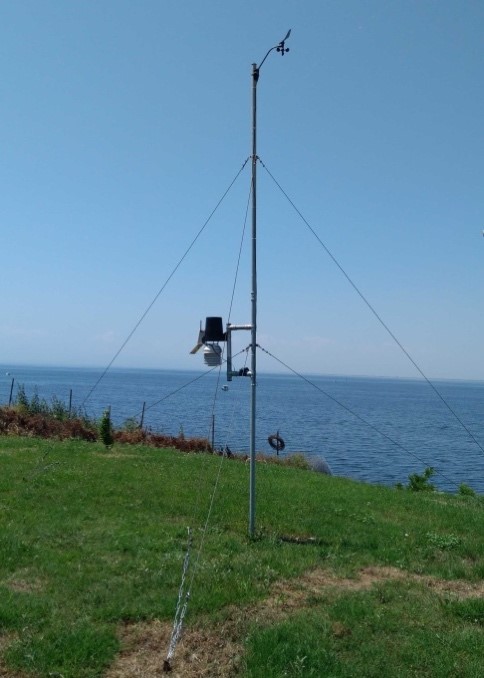
The Meteo.gr unit of the Institute for Environmental Research and Sustainable Development of the National Observatory of Athens (IERSD/NOA/Meteo.gr) took the initiative in 2006 to create a relatively low-cost surface meteorological observation network, with the aim of gradually covering the entire Greek territory (including the numerous Greek islands) with automatic meteorological stations that continuously transmit their measurements via the internet.
In December 2024, the network included 584 meteorological stations (https://www.meteo.gr/gmap.cfm). Today, it constitutes the densest network of automatic meteorological stations in Greece, complementing the network of the National Meteorological Service. The majority of the automatic meteorological stations are included in the OSCAR database of the World Meteorological Organization and in the operational data assimilation of the European Centre for Medium-Range Weather Forecasts (ECMWF).
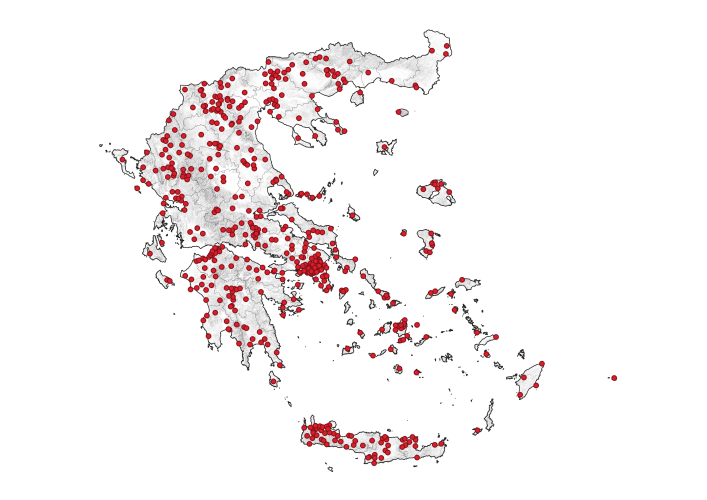
The network has been designed to meet the needs not only of the scientific community but also of various economic sectors that require access to real-time meteorological observations. The data from the network’s meteorological stations, both in real-time and in the database, are used for studying the urban environment, understanding severe weather phenomena and their impacts on society, and verifying numerical weather prediction models.
Furthermore, the network’s data are used in the agricultural sector, not only for determining the local microclimate in the area where the station is installed but also for evaluating the weather’s impact on crops. Finally, they are also used in the construction sector (determining degree-days, maximum rainfall in an area, etc.), by insurance companies (damage assessment), etc.