





Energy Forecasts
Forecasting energy quantities through the development/utilization of specialized energy models and tools, and the integration of climatic, technological, economic, and social parameters
Service Applications
01. Development – Evaluation of Energy Scenarios
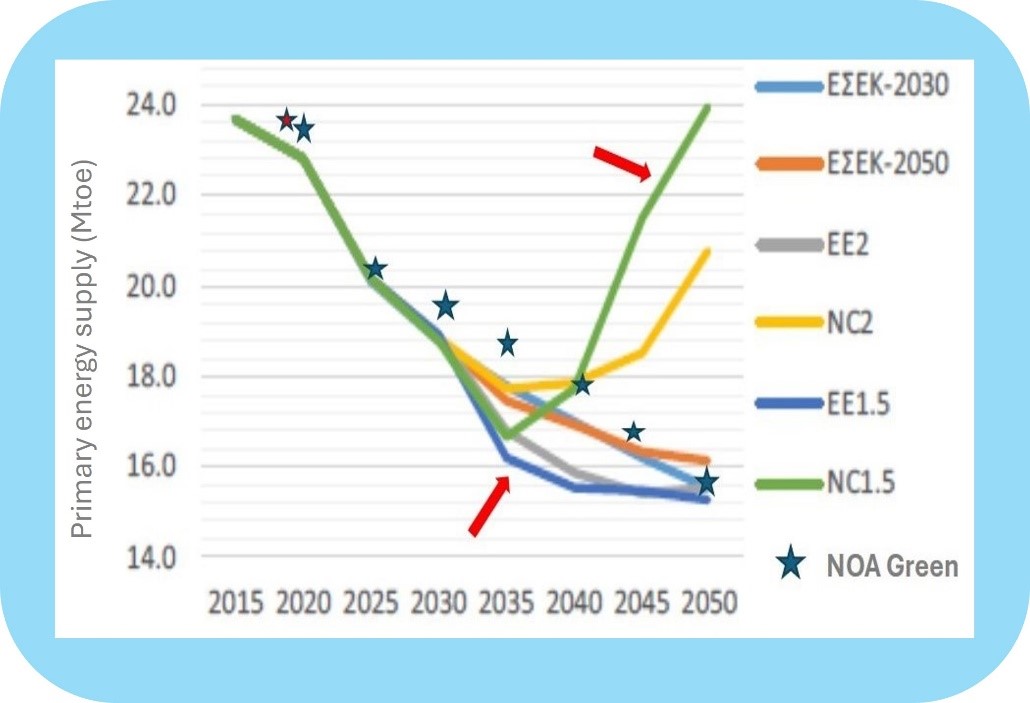
Development of energy scenarios utilizing established and internationally recognized energy models (e.g., ENPEP Balance), which simulate energy flows at all levels of the energy network (supply – conversion – transmission – energy demand) and across all key sectors and activities (exports/imports, extraction, electricity generation/cogeneration, refining, industry, transport, residential and tertiary sectors, agriculture, etc.). The models incorporate all key technologies (existing and emerging), with their techno-economic and environmental characteristics, as well as socio-economic parameters that influence the energy behavior of individual decision-makers. The economic and environmental impacts of the scenarios (e.g., greenhouse gas and air pollutant emissions) and key relevant indicators are estimated. Additionally, energy scenarios with specific environmental targets, such as decarbonization scenarios for the energy sector by 2050, are developed and evaluated.
02. Electricity & Power Demand Forecasting
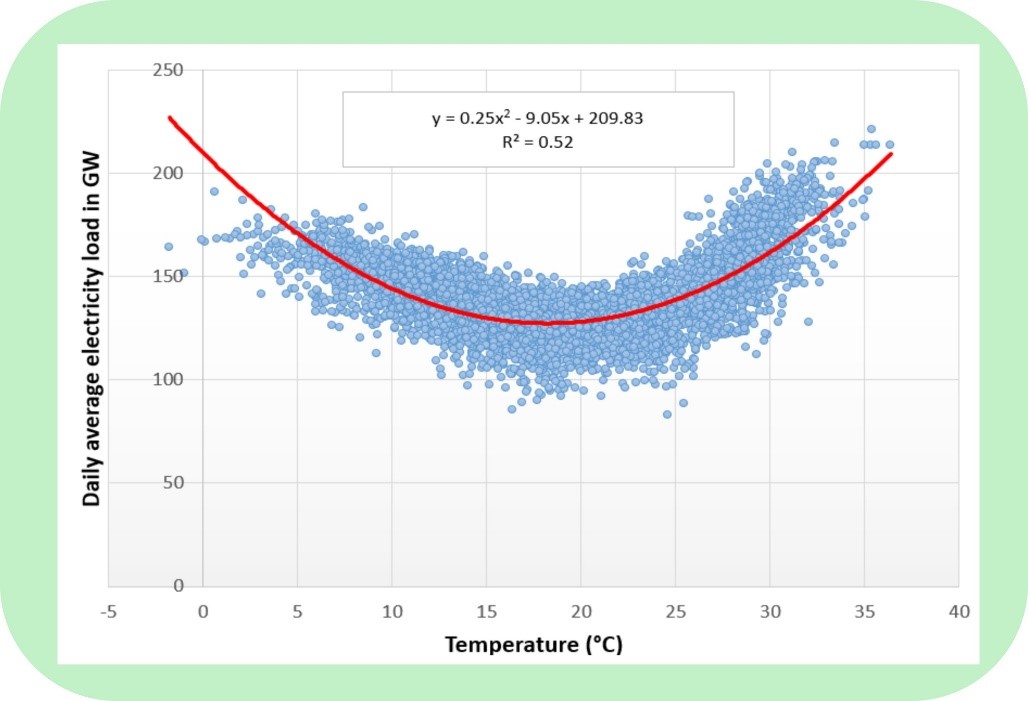
Development of analytical tools (e.g., multiple regression models), tailored to the needs of end-users, for forecasting electricity and power demand on a daily or monthly basis, incorporating economic and meteorological parameters. The analysis is conducted at national, regional, or local levels. For example, based on historical daily temperature data, heating and cooling degree days are estimated for each day of the historical period, and then the correlation between heating/cooling degree days and humidity (independent variables) with daily electricity or power demand (dependent variable) is examined. The tools also integrate non-climatic parameters, such as the existence of holidays and extraordinary conditions, income, and other socio-economic characteristics of consumers, etc. The identified energy/power demand correlation functions are combined with short-term or medium-term meteorological parameter forecasts, thus enabling the prediction of electricity or power demand at future time points.
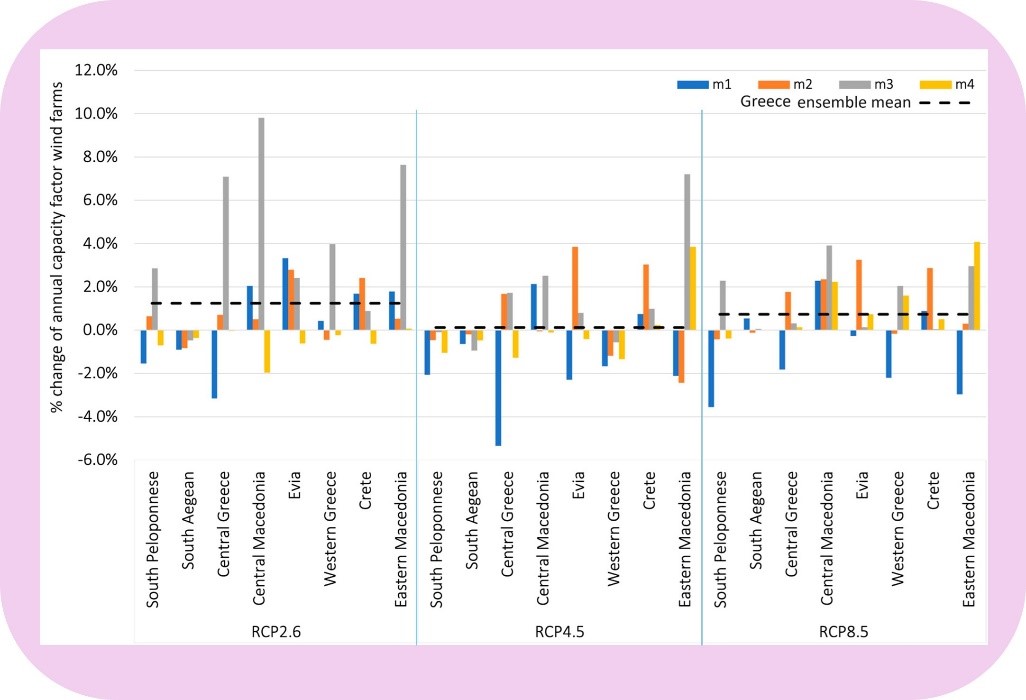
03. Forecasting Electricity Generation from Energy Facilities
Forecasting electricity generated from renewable energy facilities (e.g., wind farms, photovoltaics, hydroelectric projects) at the level of individual projects or groups of projects and any desired geographical entity, through the combined utilization of meteorological parameter measurements and production data from existing projects. Also, forecasting electricity generation from conventional thermal power plants (e.g., natural gas). The forecast can be made on a daily or monthly basis, and for various future time periods desired by end-users, using appropriate forecasts of climatic parameters (e.g., seasonal forecasting, long-term climate change scenarios).
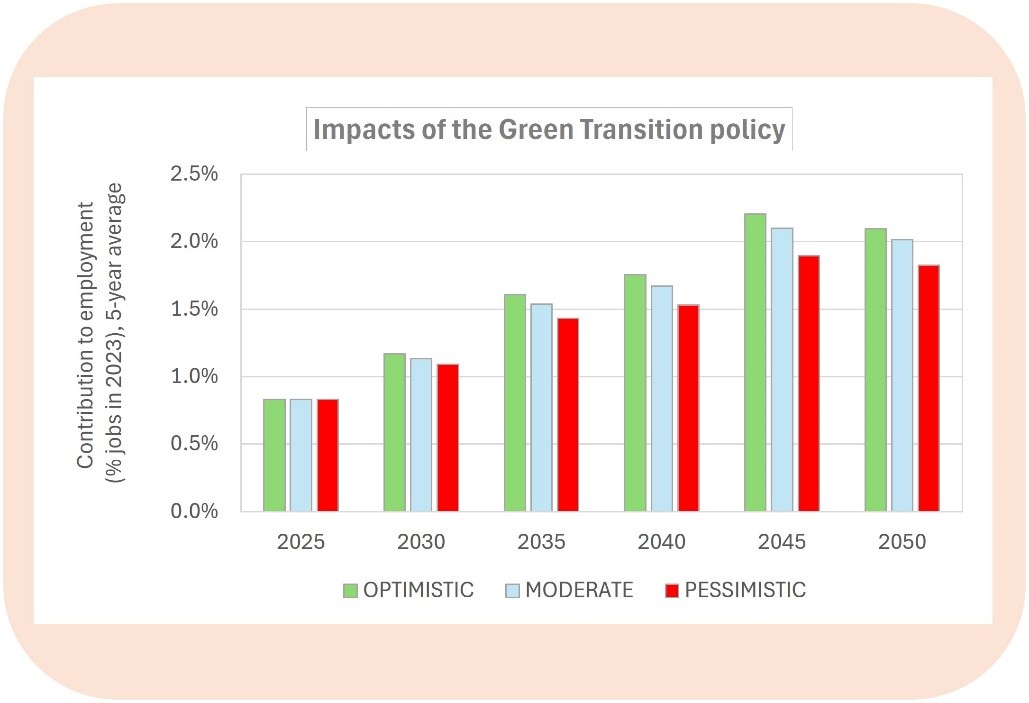
04. Evaluation of Energy and Environmental Policies
Analysis of the environmental effectiveness and economic efficiency of alternative energy and environmental policies being designed to promote the decarbonization of the economy. This evaluation includes both regulatory policies (e.g., energy efficiency standards, emission reduction targets, etc.) and economic policies (e.g., environmental taxes, emissions trading systems, etc.). The goal is to identify the most suitable policies per sector, based on the specific characteristics of the participants in the sector (households, businesses, local government, etc.). Furthermore, an analysis is conducted of the broader impacts, at national and regional levels, from the implementation of these policies on the economy, employment, public finances, public health, energy poverty, quality of life, energy security, etc.
The service is addressed to

| Businesses utilizing renewable energy sources (wind, photovoltaics, hydroelectric, biomass) that wish to forecast energy production from their facilities | Businesses operating conventional electricity generation/cogeneration units (e.g., natural gas) that wish to forecast energy production from their units | Energy Regulatory Authorities and energy companies that wish to forecast the energy and power demand of the system they oversee/serve |
| Municipalities and Regions, for estimating local impacts from the implementation of energy and environmental policies | Central government bodies that wish to develop or evaluate alternative scenarios for achieving energy or environmental targets | |
Methodologies and Tools Applied
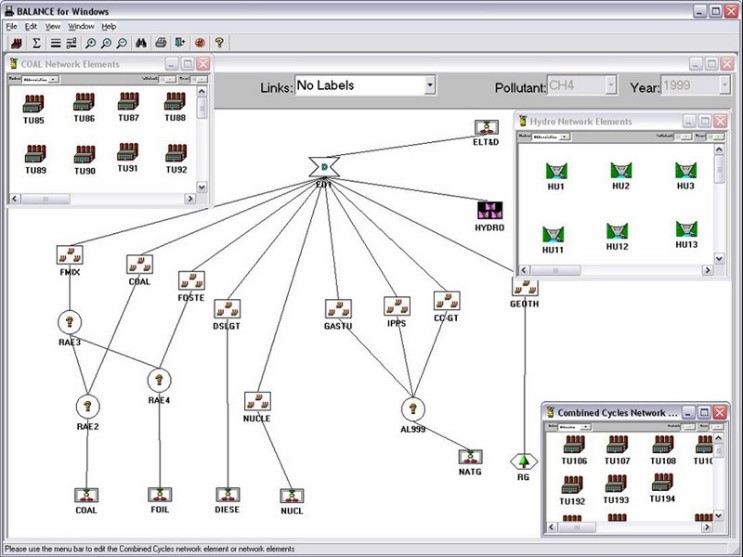
 ENPEP-Balance energy system simulation model:
- Used in over 80 countries
- Allows users to evaluate the entire energy system (energy supply and demand) and the environmental impacts of different energy strategies
- Incorporates demand elasticity
- Provides integrated economic calculations
- Enables forecasting of greenhouse gas and air pollutant emissions

Utilization of SPSS Statistics tool for analyzing the correlation between electricity/power demand and meteorological and other parameters
Development of statistical models (e.g., multiple regression)
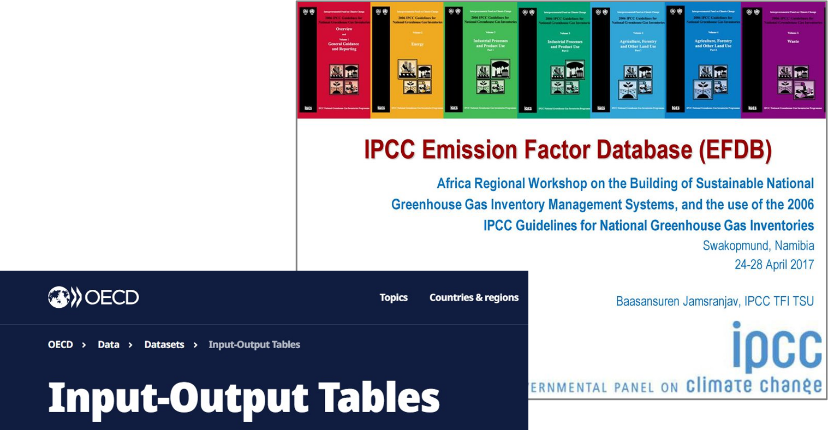
Reliable methodological tools (e.g., OECD input-output tables database) and internationally recognized databases (e.g., IPCC) for estimating the economic, social, and environmental impacts of implementing energy and environmental policies
Collaboration with the end-user to optimally utilize available historical data, accurately capture the characteristics of their energy facilities, and forecast energy/power production at the desired temporal and spatial scale
Contact
- Sebastian Moirasgentis (seba@noa.gr, ☏ 210-3490830)
- Giannis Sarafidis (sara@noa.gr, ☏ 210-3490900)
- Elena Georgopoulou (elenag@noa.gr, ☏ 210-3490915)