







Carbon and Environmental Footprint
01. Scope 1, 2, and 3 Emissions
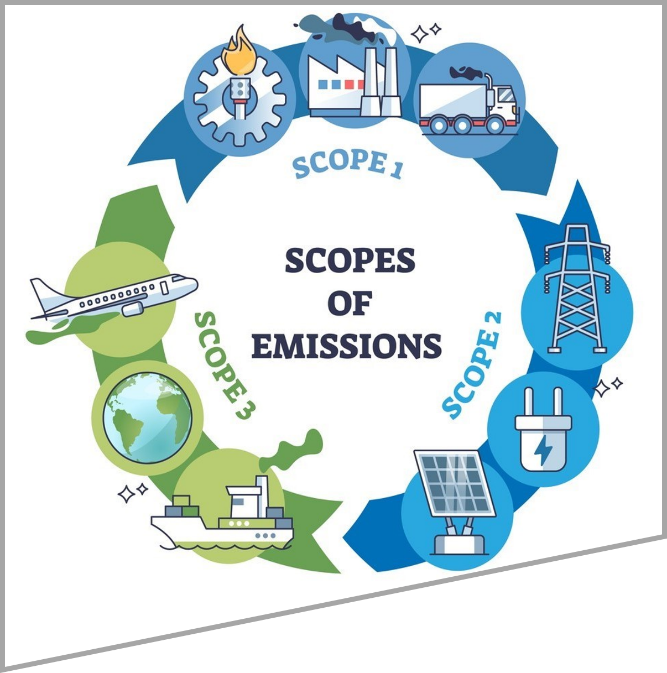
Defining the organizational boundaries of the emissions inventory (organizational boundaries), i.e., which activities will be included in the emissions assessment. Determining the operational boundaries of the inventory to identify emission sources related to the operation of activities. Analysis of greenhouse gas emission sources by category:
- Direct emissions (Scope 1) from sources owned/controlled by the company (e.g., fuel consumption for heating premises)
- Indirect emissions from the use of energy (Scope 2) supplied to the company but produced at another company’s facilities (e.g., electricity consumption)
- Other indirect emissions not included in the previous category and related to activities across the company’s entire value chain (Scope 3), both upstream and downstream of its production activities.
Identifying appropriate activity data per emission source and collecting data, utilizing to the maximum extent possible the information maintained in the company’s information systems. Selecting appropriate emission factors, based on internationally recognized sources, such as IPCC Guidelines, the GHG Protocol, the national greenhouse gas emissions inventory, and open-source databases maintained by organizations like DEFRA, IEA, EUROSTAT, etc. Developing analytical calculation tools, adapted to the company’s needs. Calculating emissions per source and category. Drafting an inventory report (methodology, results, any shortcomings, and improvement proposals).
02. Scope 1, 2, and 3 Target Setting
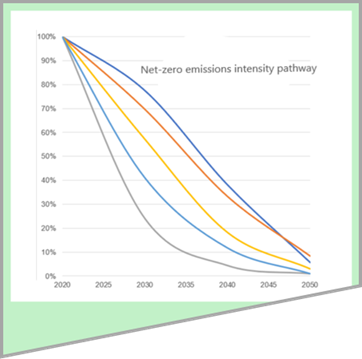
Emission reduction targets are set based on various internationally recognized standards (e.g., Science Based Targets Initiative, Net Zero Banking Alliance, etc.), over a medium-term (e.g., 2030) or long-term (e.g., 2050) horizon, and usually cover all Scope 1 and 2 emissions as well as a significant portion of Scope 3 emissions. The ambition of the target setting, when based on a standard, should be compatible with a decarbonization scenario, most commonly one that limits the increase in average global temperature to 1.5°C by the end of the century, with no or very limited intermediate overshoots (‘Net-zero emissions scenario‘). Depending on the sector of economic activity, and also on the category of emissions, target setting can take various forms, such as a commitment to absolute emission reduction, a commitment to reduce emission intensity based on physical activity data (application of the Sectoral Decarbonization Approach), a commitment to reduce emission intensity based on economic activity data (application of the Temperature Scoring Approach), a commitment to procure electricity only from RES, etc.
The service includes: Review of existing emission reduction targets of the company/organization, and verification of whether they cover all sources by greenhouse gas emission category (Scope). Addressing any gaps in the calculation of emissions by category. Analysis of available target-setting standards for the specific activity of the company/organization, and selection of the most appropriate one, in collaboration with the company/organization. Calculation of proposed emission/emission intensity reduction targets for future periods, and their finalization in collaboration with the company/organization.
03. Biodiversity Footprint

The assessment of a company’s/organization’s biodiversity footprint follows a methodological approach similar to that of carbon footprint calculation. Common operational and organizational inventory boundaries are usually defined to save resources regarding data collection, etc. The biodiversity footprint of a company/organization is calculated by considering the environmental pressures exerted by the company/organization on terrestrial, aquatic, and marine ecosystems, from all stages of its value chain (direct and indirect environmental pressures), covering land-use changes, natural resource use, climate change, pollutant emissions, and the invasion of alien species. The steps followed for the calculation include:
• recording of emitted environmental loads and used natural resources related to the activities of the company/organization performing the footprint assessment,
• assessment of the reference environmental pressure per natural mechanism through which biodiversity is affected,
• assessment of biodiversity loss distinctly in terrestrial, aquatic, and marine ecosystems, and
• overall biodiversity footprint.
In addition to the impacts that the company/organization may create on biodiversity, which are estimated through the biodiversity footprint, the sustainability of the company/organization may depend on the ecosystem services provided by the natural environment. In this context, the degree of dependence that determines the vulnerability of the company/organization regarding environmental quality is evaluated through appropriate tools for monitoring the activities performed.
04. Biodiversity Target Setting
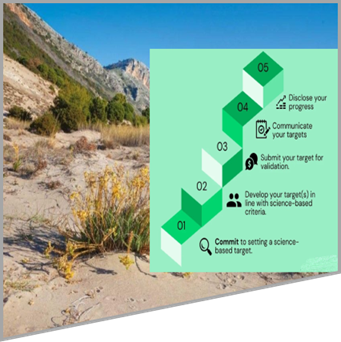
The adoption of biodiversity protection targets by companies/organizations can be done in a scientifically sound manner and at the required level of ambition through the Science Based Targets Network (SBTN). Through SBTN, the interested company/organization applies a step-by-step sequential process where, in the first phase, an assessment is made of the direct and indirect (from the value chain) activities of the company/organization that may have significant impacts on biodiversity. In this context, quantitative data are collected both for the environmental pressures exerted by the company’s/organization’s activities and for the state of nature in the areas where these activities take place.
Subsequently, the company’s/organization’s areas of action are prioritized, with the aim of reducing impacts on biodiversity. Specifically, the locations and economic activities to be included in the target setting are determined, as well as the actions that should be taken as a priority. The 3rd step involves the formulation of the target setting, which must have the appropriate scope and ambition to allow its validation by SBTN. This is followed by the implementation of measures by the company/organization to reduce biodiversity impacts and the monitoring of progress that allows for corrective actions, if required.
05. Target Monitoring
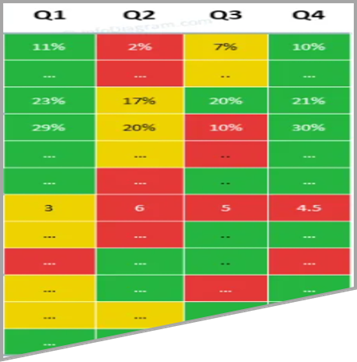
The service includes:
• Review of targets already set by the company/organization for reducing its carbon/environmental footprint. Collection and processing of company/organization data to assess progress towards achieving targets, identify any problems/delays encountered during target implementation, and analyze their causes.
• Development of a target progress matrix/table, development/updating of progress assessment indicators, and identification/redefinition of procedures for their regular updating.
• Re-evaluation of the ambition of targets in relation, on the one hand, to evolving internationally recognized standards (e.g., SBTi, NZBA, etc.), and on the other hand, to the reality of the company’s/organization’s operations, so that any revised targets are environmentally ambitious but also realistic.
06. Materiality Analyses

The double materiality analysis aims to identify the material/significant (a) issues affecting the company/organization from a financial perspective and (b) impacts on society and the environment from the company’s/organization’s activities.
Double materiality analysis is a central point of the new European Corporate Sustainability Reporting Directive (CSRD Directive), as the results of the analysis determine the content of the Sustainability Statement that must be prepared within the framework of the Directive.
The double materiality analysis process includes:
• Development of assessment methodology
• Identification of company/organization activities across its entire value chain
• Identification of impacts, risks, and opportunities related to its activities
• Involvement of management and external stakeholders through surveys with questionnaires, workshops, and interviews
• Final assessment and identification of material issues.
07. Sustainability Statement
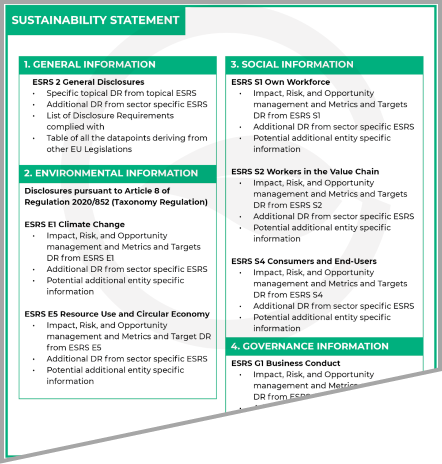
The new European Corporate Sustainability Reporting Directive (CSRD Directive – CSRD Directive) sets new, stricter requirements for companies/organizations to disclose detailed information regarding their sustainability performance. Compliance with the CSRD Directive requires companies/organizations to ensure that information on environmental, social, and corporate governance is accurate, transparent, and covers the full scope of the company’s/organization’s activities. The Sustainability Statement is included as a section in the company’s/organization’s annual financial report. The environmental issues covered are: climate change, pollution, water and marine resources, biodiversity and ecosystems, and resource use and circular economy.
The service provided includes:
• Double materiality analysis to determine the environmental issues to be included in the Sustainability Statement.
• Recording, for each significant environmental issue, of existing practices, procedures, indicators, etc., of the company/organization, based on the European Sustainability Reporting Standards (ESRS), identification of any shortcomings, and determination of actions to address them.
• Preparation of the Sustainability Statement, in collaboration with the responsible parties of the company/organization.
08. Sustainability Reports
A company’s/organization’s Sustainability Report describes its actions related to the environment, society, and governance. For issues related to the environment, the following are recorded/presented:
• Policies that have been developed
• Targets that have been set within the framework of the policies
• Actions implemented to achieve the targets, address environmental risks, and leverage environmental opportunities
• Indicators that are monitored (e.g., energy consumption, greenhouse gas emissions, emission intensity, etc.) to evaluate performance.
The content (information to be disclosed) is defined based on principles and guidelines, such as the Global Reporting Initiative (GRI) Sustainability Reporting Guidelines, the United Nations Global Compact Principles, the Athens Stock Exchange (ATHEX) ESG Disclosure Guide, the Recommendations of the Task Force on Climate-related Financial Disclosures (TCFD), etc.
The service provided includes: Analysis of available company/organization data compared to various guidelines, and identification of any shortcomings. Identification of environmental issues that meet completeness requirements, and collection of relevant data for policies, targets, actions, risk-opportunity management, and monitoring indicators. Preparation of the Sustainability Report, in collaboration with the responsible parties of the company/organization. Support for designing improvement actions for future Reports.