


Climate and Climate Change
From Global to Local Climate
The use of fossil fuels and other anthropogenic activities release greenhouse gases that affect atmospheric mechanisms and alter the global climate. In turn, local climatic conditions, which remained stable for centuries, are changing, and indeed in different ways for each region, with the Mediterranean region being among the ‘climate change hot spots’ globally. Extreme phenomena (floods, heatwaves, drought) are becoming more frequent and intense, with parallel spatial and seasonal shifts. Furthermore, the continuous concentration of the population in urban centers exacerbates the impacts of climate change, creating more adverse environmental conditions that increase energy demands and the risk to public health. These changes have significant local-scale impacts and affect the environment and economic sectors in various ways, particularly threatening the most vulnerable social groups.
The IEPBA research team examines the relationships between global and local climate, changes in climatic parameters and extreme phenomena, the physical, economic, and social impacts of these changes, and adaptation measures. It also investigates mitigation methods through measures and policies to reduce greenhouse gas emissions.
Research Challenges
Through a variety of research projects and infrastructures, IEPBA strives to address the many scientific challenges that characterize climate change research. These challenges span the entire information flow chain to decision-makers and the general public, from the utilization of primary data from climate models to the evaluation of policies and measures for adaptation and mitigation.
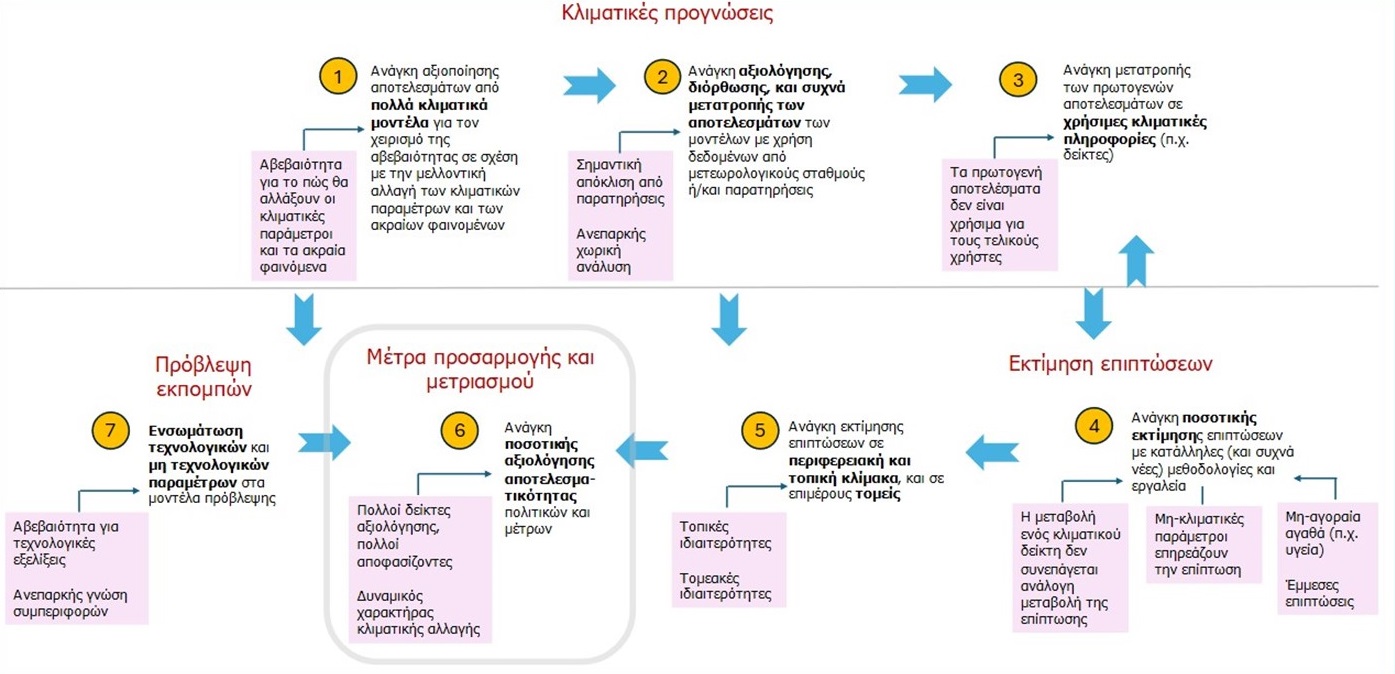
The research activities of IERSD focus on these scientific challenges, combining data collection and utilization, development of analytical methodologies, models, and tools, field research, and meaningful communication with decision-makers and citizens.
IEPBA’s goal is for the results of climate change research to reach society, serving collective well-being.
Key Research Areas
Climate Data
- Development of tools and methodologies for analyzing historical climate records and data from climate models and meteorological stations, with the aim of producing reliable climate data with appropriate spatial and temporal resolution. Production of climate indicators for visualizing mean values, extreme phenomena, and trends.
Contact:
Christos Giannakopoulos (cgiannak@noa.gr)
Dimitra Founda (founda@noa.gr)
Climate Information
- Production of detailed sectoral climate information (for energy, agriculture, forest fires, etc.) at regional/local scale, adapted to the needs of stakeholders and policymakers.
Contact:
Christos Giannakopoulos (cgiannak@noa.gr)
Impacts
- Quantitative assessment of the physical impacts of climate change and extreme phenomena in the present and future in sectors such as energy, tourism, agriculture, water resources, and health. Development of relevant statistical and other models and tools. Assessment of direct and indirect socio-economic impacts.
Contact:
Elena Georgopoulou (elenag@noa.gr)
Christos Giannakopoulos (cgiannak@noa.gr)
Greenhouse Gas Emissions
- Greenhouse gas emission forecasts at national and sectoral levels, with integration of behavioral, socio-economic, and technological parameters.
Contact:
Sebastianos Mirasgentis (seba@noa.gr)
Giannis Sarafidis (sara@noa.gr)
Adaptation and Mitigation
- Quantitative evaluation of the effectiveness of adaptation actions to the negative impacts of climate change. Environmental and economic evaluation of emission reduction actions (mitigation).
Contact:
Elena Georgopoulou (elenag@noa.gr)
Sebastianos Mirasgentis (seba@noa.gr)
Achievements – Distinctions of Team Members
 Lead Authors in the 4th (2007), 5th (2014), and 6th (2022) IPCC Assessment Reports on Climate Change Mitigation
National Representation in the ‘Mission of Adaptation Sub-Group’ of the Horizon Europe Shadow Program Committee
Lead Authors in the 4th (2007), 5th (2014), and 6th (2022) IPCC Reports on Climate Change Impacts, Adaptation, and Vulnerability
Implementation of numerous national inventories and projections for greenhouse gas emissions, and national reports on their reduction measures
Operation, from 2010 to present, of the IPCC National Focal Point for climate change
Official recognition/certification (2017) by the World Meteorological Organization (WMO) for the reliable and uninterrupted operation of the EAA’s historical climate station, among 60 century-old stations worldwide
Participation in the interdisciplinary Committee of the Bank of Greece studying the impacts of climate change on the Greek economy
EcoCity Award (in 2018) to the IEPBA team for maintaining and providing the historical climate archive spanning more than 1.5 centuries
Representative projects

CHOICE (Mainstreaming Integrated Assessment Models by embedding behavioural change and actor heterogeneity and increasing their outreach to citizens, communities and industrial actors)
The project aims to improve Integrated Assessment Models (IAMs) by incorporating greenhouse gas emission reduction measures in final product demand and the food chain, so that the models actively support the goal of net-zero emissions by 2050.
Duration: 2023-2026
Funding: Horizon Europe
Contact: Christos Giannakopoulos (cgiannak@noa.gr)
FIRE-RES (Innovative technologies and socio-ecological-economic solutions for fire-resilient territories in Europe)
Forest fires pose a significant environmental, economic, and social threat worldwide. The project aims to develop an Integrated Fire Management Strategy to effectively address forest fires in Europe, holistically connecting synergies between prevention-preparedness, detection-response, and restoration-adaptation.
Duration: 2021-2025
Funding: Horizon Europe
Contact: Christos Giannakopoulos (cgiannak@noa.gr)

JustReDi (Resilience, Inclusiveness and Development: Towards a Just Green and Digital Transition of Greek Regions)
The digital transformation and green transition in Greece must be achieved with justice, resilience, sustainable development, and social inclusion. The project aims to contribute to this through actions such as assessing impacts on households and energy poverty, mapping areas, and identifying professional groups and economic sectors that are cumulatively or differentially affected or benefited, etc.
Duration: 2023-2025
Funding: Recovery and Resilience Facility
Contact: Sebastianos Mirasgentis (seba@noa.gr)
LIFE-IP AdaptInGR (Innovative technologies & socio-ecological-economic solutions for fire resilient territories in Europe)
The project aims to strengthen the implementation of Greece’s National Strategy and 13 Regional Plans for adaptation to climate change during the current first adaptation cycle (2016-2025), and to prepare the transition to the second policy cycle for adaptation (2026+), with appropriate actions at national, regional, and local levels.
Duration: 2019-2026
Funding: EC LIFE Programme
Contact: Christos Giannakopoulos (cgiannak@noa.gr)
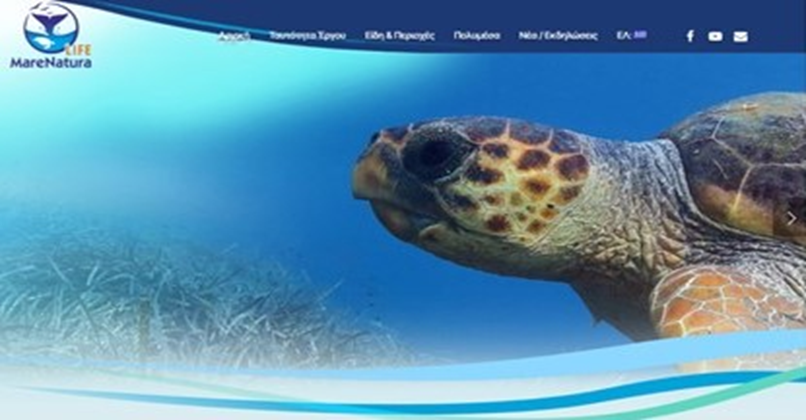
LIFE-MareNatura (Conservation of priority species of marine megafauna in Greece and Italy)
The project targets threats affecting nine of the most endangered EU priority species (seabirds, sea turtles, marine mammals), by identifying biodiversity hotspots in the Ionian, Southern Adriatic, and Aegean Seas. IEPBA provides climate forecasts and indicators for the study area, focusing on atmospheric and oceanic variables that directly affect the reproduction, feeding, and migration corridors of the species, as well as downscaling projections for selected biodiversity hotspots.
Duration: 2023-2029
Funding: EC LIFE Programme
Contact: Christos Giannakopoulos (cgiannak@noa.gr)
CLIMPACT II (Support for the operational upgrade of the National Network for Climate Change)
The project aims to collect and utilize data on climate change, develop methodologies and tools for assessing impacts and adaptation measures in critical sectors (energy, tourism, agriculture, health, urban environment), and develop early warning tools for critical infrastructure, energy, and health. It also includes the formulation and evaluation of decarbonization scenarios for the Greek economy until 2050, and their impacts on electricity costs, economic growth, and employment.
Duration: 2023-2025
Funding: National Development Programme – Ministry of Development – General Secretariat for Research and Innovation
Contact: Christos Giannakopoulos (cgiannak@noa.gr), Sebastianos Mirasgentis (seba@noa.gr)
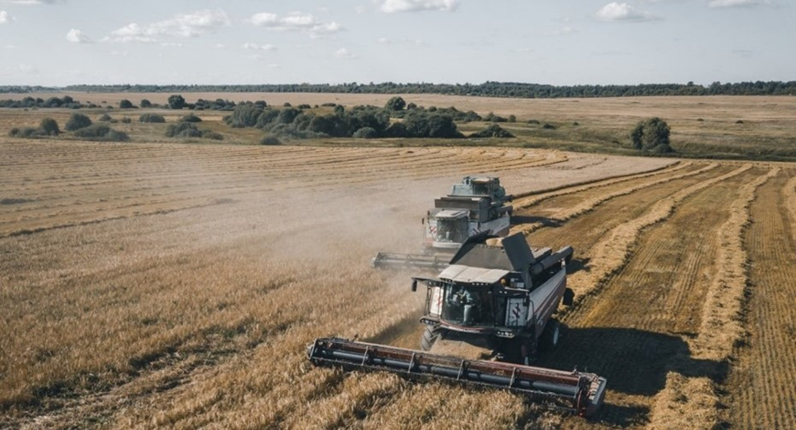
AGRIFOOD (Analysis of the impacts of climate change on the agricultural and livestock sector in Greece)
The project quantitatively assesses the impacts of climate change on the productivity of Greek agriculture and livestock, for all regions of the country and for a wide variety of crops and livestock products. It examines both chronic changes in climatic conditions and extreme weather events. It also estimates the impacts on the added value and employment of the food and beverage sector, and on the wider economy. Finally, the effectiveness of specific adaptation actions is quantitatively evaluated.
Duration: 2023-2024
Funding: Private sector
Contact: Giannis Sarafidis (sara@noa.gr), Elena Georgopoulou (elenag@noa.gr)
Research Team
No staff members found in this category.