




Atmospheric Environment
The degradation of the environment, and the atmosphere in particular, due to increased pollution and emissions of gaseous and particulate pollutants, leads to serious impacts on human health and ecosystems. For this reason, continuous monitoring of atmospheric composition is required to record different types of pollutants and their concentrations, identify their emission sources, and fully understand the physical and chemical processes that affect the persistence and dispersion of pollutants in the atmosphere. The next immediate step is to assess the impacts on both human health and well-being and on ecosystems, and to develop specific pollution reduction strategies, along with informing and raising public awareness about the effects of air pollution and ways to address the problem.
Research Challenges
- Identification of sources and atmospheric conditions that shape the levels of health-toxic compounds, and mapping of exposure risk in Greek cities, considering the issue of environmental justice at a national level.
- Study of new emerging pollutants significant for human health and climate, which require specialized instrumentation and are included in the new EU Directive, e.g., black carbon, ultrafine particles, atmospheric oxidative potential.
- Intensification and standardization of the use of measurements from air quality sensor networks, with calibration protocols and quality assurance practices, as an effective tool to support real-time public information and warning.
- Investigation and understanding of aerosol-marine biogeochemical climate cycle interactions. This uncertainty increases as socioeconomic pressures, climate change, and technological advancements continue to change the way we live and interact with the marine environment.
- Methods for restoring, improving, and protecting nature in the urban environment, contributing to adaptation and resilience to extreme atmospheric phenomena in cities (air quality – climate nexus).
The research activities of IERSD focus on these scientific challenges, combining data collection and utilization, development of analytical methodologies, models, and tools, field research, and meaningful communication with decision-makers and citizens.
The goal of IERSD is for the results of research on the Atmospheric Environment to reach society, serving collective well-being.
Key Research Areas
Atmospheric quality and composition
- In-situ measurements and experimental measurement campaigns
- Monitoring of concentrations of different aerosol types and their spatiotemporal variation
- Monitoring of levels of chemical compounds with regulated limits for human health and climate
- Understanding mechanisms/processes that control the levels and variability of atmospheric constituents
Contact:
Nikos Mihalopoulos (nmihalo@noa.gr),
Eleni Liakakou (liakakou@noa.gr)
Earth Observation, policy, and urban perspective
- Research on gas and aerosol properties and their impacts on climate parameters
- Development of a methodological framework for the implementation and evaluation of the effectiveness of Nature-Based Solutions (NbS)
- Investigation of climate change adaptation indicators based on geo-observation.
- Interconnection of geospatial data with physicochemical atmospheric models to produce more realistic estimates (static, dynamic) of population exposure to air pollution.
- Integration of socio-economic data for vulnerability assessment and to support the design of fair and effective measures
Contact:
Evangelos Gerasopoulos (egera@noa.gr)
Modeling of atmospheric physicochemical processes
- Earth System Modeling (ESM) to investigate potential disturbances of ocean biogeochemistry due to changes in atmospheric deposition for past and future atmospheres
- Simulations of physicochemical atmospheric interactions at regional and urban scales
- Study of intra-urban atmospheric pollution variability in Attica under selected climate scenarios
Contact:
Stelios Myriokefalitakis (steliosm@noa.gr)
Environment and health
- Creation of reliable population exposure data for health-harmful compounds for use in health studies.
- Investigation of causal links between exposure and health impacts.
- Proposal of biologically plausible mechanisms following inhalation exposure.
- Risk assessment due to population exposure to harmful compounds
Contact:
Aikaterini Bougiatioti (abougiat@noa.gr)
Anthropogenic emissions and pollution forecasting
- Creation of a database of anthropogenic emissions from multiple human activities (road transport, shipping, aviation, residential heating, commerce, agriculture, and industry)
- Combination of the anthropogenic emissions database with GIS and data from official sources (Ministries, ELSTAT, Eurostat)
- Air pollution forecasts for cities and points of interest.
- Estimation of hospitalization risk due to respiratory and cardiovascular diseases
Contact:
Vasiliki Asimakopoulou (vasiliki@noa.gr)
Achievements – Distinctions of Team Members
The Pillar members have a significant international presence and important roles in international committees, as shown by their participation as:
 Expert for staffing the conceptualization and scoping team of the Special Report “Climate Change and Cities” within the framework of preparing the 7th assessment cycle of the Intergovernmental Panel on Climate Change – IPCC (AR7)
Co-chair of the Advisory Programme Board of the international, intergovernmental GEO (Group on Earth Observations) committee supervised by the United Nations World Meteorological Organization, of the corresponding Urban Resilience Sub-Group, and of the international initiative “Earth Observations for the study of the impacts of Climate Change on Global Urban Heritage” in collaboration with the UNESCO World Heritage Centre, within the same GEO framework
Secretary General of the International Aerosol Association (IARA)
National representative to the JRC (Joint Research Center) and the EU (climate change)
Member of the Steering Committee for the creation and operation of the model research station NEO (Navarino Environmental Observatory) in the Costa Navarino area in Messinia, in cooperation with the tourism development investment company TEMES S.A., the Academy of Athens, and Stockholm University (Bert Bolin Center)
Representative projects
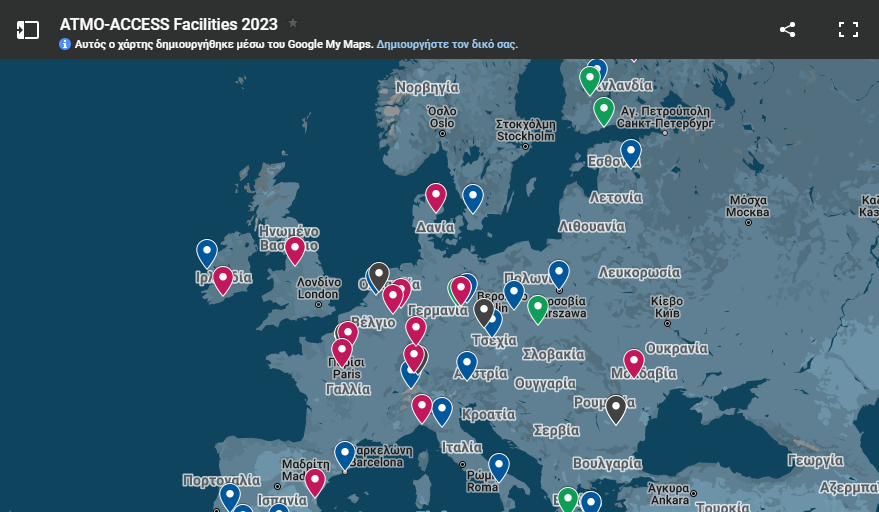
ATMO-ACCESS (Sustainable Access to Atmospheric Research Facilities)
ATMO-ACCESS is the organized response of distributed atmospheric research facilities to pilot the development of a new model of Integrated Activities. The project provides a series of recommendations for creating an integrated and sustainable framework for accessing distributed atmospheric research infrastructures (RIs), ensuring comprehensive access and optimized use of the services they provide. ATMO-ACCESS provides physical and remote access to 43 operational European atmospheric research facilities, including ground observation stations, simulation chambers, as well as mobile facilities and central laboratories that are fundamental elements in distributed research infrastructures.
Duration: 04/2021-03/2025
Funding: Horizon 2020
Contact: Nikos Mihalopoulos (nmihalo@noa.gr)
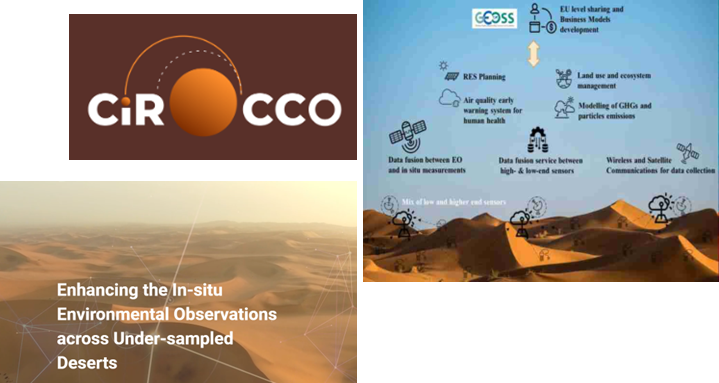
CiROCCO (Enhancing the In-situ Environmental Observations across Under-sampled Deserts)
CiROCCO aims to create an end-to-end detection system, consisting of a distributed network of economical detection nodes combined with modern remote sensing techniques and assimilation modeling techniques. The sensor network enhances the current lack of ground observation in desert areas, offering a functional and easy-to-maintain and expand solution. CiROCCO involves 12 partners and implements 4 pilot studies in Egypt, Cyprus, Serbia, and Spain, with the installation of identical detection nodes and the same data collection equipment in all coverage areas, aiming to produce consistent time-series data in a standardized manner.
Duration: 01/2023-12/2026
Funding: Horizon Europe
Contact: Grivas Georgios (ggrivas@noa.gr)
Eiffel (Earth Observation applications for climate change adaptation & mitigation)
EIFFEL changed the game in the field of climate change adaptation and mitigation, leveraging the benefits of GEOSS data. The project offers the community the pioneering ability to exploit existing GEOSS Earth Observation datasets and also builds on previous knowledge, with minimal new data collection activities. It is based on the design of value-added services interoperable with GEOSS, using AI-based cognitive search and metadata augmentation tools, including Natural Language Processing. Eiffel involves 19 partners in 5 pilot studies across 6 European countries (Belgium-Netherlands, Lithuania, Spain, Greece, Finland).
Duration: 06/2021-05/2024
Funding: Horizon 2020
Contact: xxxxx (xxxx@noa.gr)
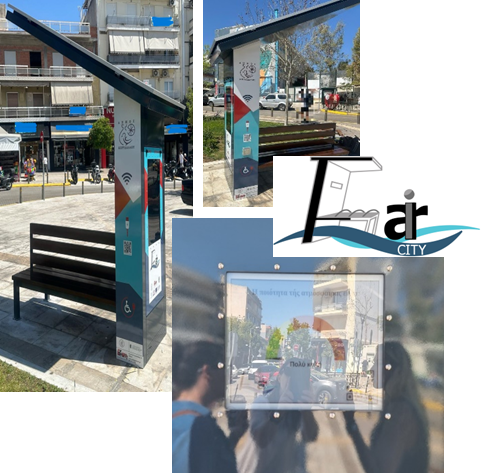
FAIRCITY (Enhancing the In-situ Environmental Observations across Under-sampled Deserts)
The FAIRCITY project develops the air quality monitoring network in the future Smart City environment in 3 municipalities of Attica with “Smart Stations”. These consist of a smart bench (free charging socket for disabled wheelchairs, free wifi, etc.) with integrated sensors for continuous measurement of gaseous and particulate pollutant concentrations, aiming at immediate information for citizens and municipalities. The project is a collaboration between NOA, NKUA, and Energy4Smart.
Duration: 06/2023-03/2025
Funding: Regional Operational Program of Attica, RESEARCH AND INNOVATION SYNERGIES-OP ATTIKA (ESPA 2014-2020)
Contact: Vasiliki Asimakopoulou (vasiliki@noa.gr)
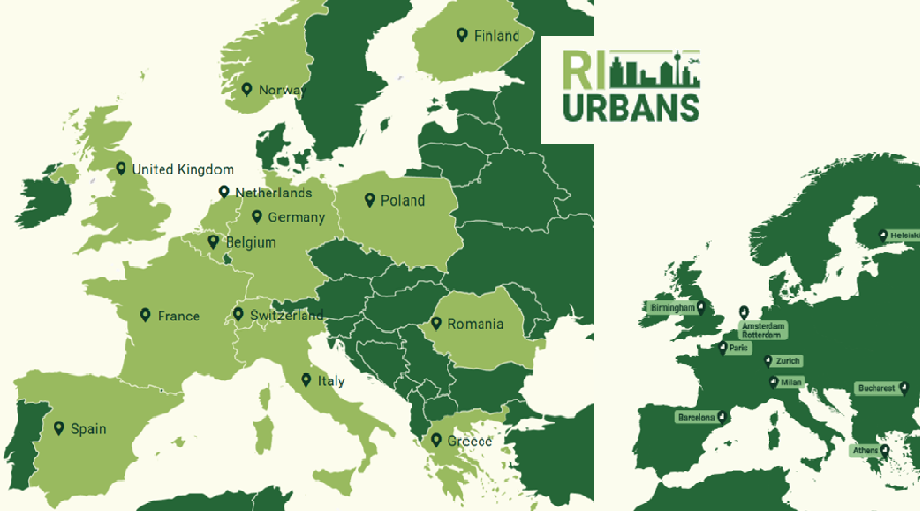
RI-URBANS (Turning clean urban air into reality)
The RI-URBANS project aims to demonstrate how Service Tools (STs) from atmospheric research infrastructures (RIs) can be adapted and improved to better address challenges and societal needs related to air quality (AQ) in European cities and industrial hotspots. RI-URBANS involves 27 partners and implements 5 pilot studies in 9 selected European cities (Athens, Barcelona, Birmingham, Bucharest, Helsinki, Milan-Bologna, Paris, Rotterdam-Amsterdam, and Zurich) to test and demonstrate services. These selected European cities represent different air quality conditions.
Duration: 10/2021-09/2025
Funding: Horizon 2020
Contact: xxxxx (xxxx@noa.gr)
Urban Releaf (Enhancing the In-situ Environmental Observations across Under-sampled Deserts)
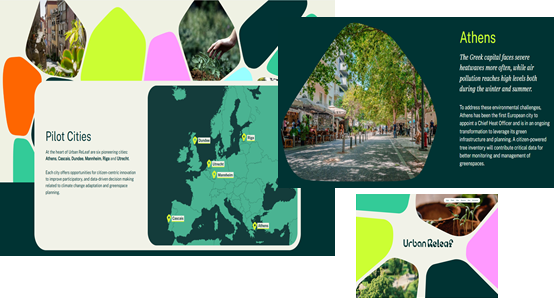
The Urban ReLeaf project focuses on actions that leverage the broad potential of citizen science, aiming to develop and use innovative technologies that create data ecosystems capable of supporting urban policies for green infrastructure planning and climate change adaptation. The project is coordinated by the International Institute for Applied Systems Analysis (IIASA) and includes technical partners who have implemented H2020 projects related to citizen observatories, as well as six cities (Athens, Cascais, Dundee, Mannheim, Riga, and Utrecht) willing to adopt the new data streams for urban green planning and policy-making, in collaboration with citizens and especially vulnerable groups.
Duration: 01/2023-12/2026
Funding: Horizon Europe
Contact: Evangelos Gerasopoulos (egera@noa.gr)
METRONOME (Design, M&E, City-Transformative Intelligence)
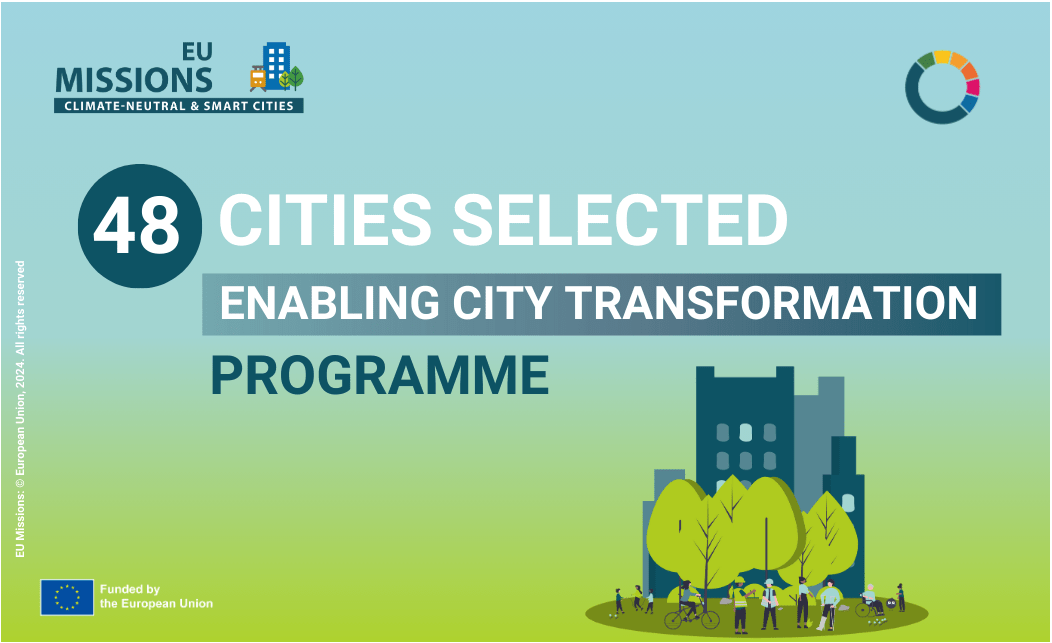
The project, coordinated by the Municipality of Ioannina and supported by the Municipality of Kozani, ELSTAT, the environmental consulting company Breakeven Consulting, and the Institute for Environmental Research and Sustainable Development of the National Observatory of Athens, stands out in Europe. By joining the NetZeroCities/Horizon Europe program, it is the only Greek proposal approved for the implementation of innovative actions in the field of climate change and urban sustainability. The collaboration of the Institute’s research teams APCG (Atmospheric Physics and Chemistry Group), GREC (Group Energy Conservation), and SOLEA (Renewable Energy Applications Group) makes it a leader in providing urban sustainability and resilience services.
Duration:
Funding: EU Mission for Climate-Neutral and Smart Cities
Contact: xxxxx (xxxxx@noa.gr)
Research Team
No staff members found in this category.